
In the United States, once a year, on March 17th, St. Patrick’s Day, everyone is Irish., gleefully drinking Guinness and Smithwicks and scarfing up soda bread, corned beef and cabbage. The rest of at the time, about 35 million Americans–a bit more than 10% of the total population–claim Irish heritage. In New England — the northeastern corner of the U.S. where I grew up –more than one in five have Irish ancestors.
And it’s no wonder. Since 1820, about 6 million people have emigrated from Ireland to the U.S., nearly a million in the decade between 1850 and 1860 alone, in the aftermath of the potato blight that decimated Ireland’s food supply. Their impact on American culture and history is enormous. Nearly 200,000 Irish born fought in the U.S. Civil War, 90% of them on the Union side. Irish immigrants became leaders in the burgeoning U.S. labor union movement which helped forge a thriving American middle class. Irish men found work in growing urban police and fire departments and remain a significant component of forces in New York, Boston, Chicago and other cities.
Before spending the last month in Ireland, I knew, of course, about the great waves of Irish immigrants who washed up on American shores during and after the horrific midcentury famine in Ireland. My own family has Irish roots: My mother’s paternal grandfather, James Kelley, arrived in the U.S. in 1866, one of a half-dozen or so solo male travelers with that name listed as steerage passengers on steamships arriving in New York City that year from Ireland. His wife, Julia (or perhaps Juliana — census takers in those days were either partially deaf or had the devil of a time understanding Irish accents, so exact names and spellings changed from one census year to another) , was born in the U.S. in 1853. Her parents had arrived in New Jersey from Ireland a few years earlier. The gravestones of two of my dad’s great-grandparents, Michael and Kate Shoughro (or Sugrue as it is more normally spelled when anglicized) indicates that they were from County Kerry. They must have also arrived in the mid 1800s: their first child, Bridget, was born in Kerry in 1856; and died at age eight in Rhode Island in 1864. Another great grandmother seems to have originally come from County Clare. She emigrated to the U.S. in 1872 with a passel of Bristow kids born during a preceding decades-long sojourn in Greenwich, England.
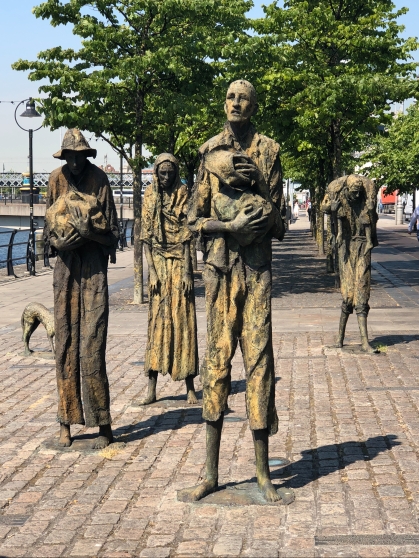
What i didn’t realize until I visited EPIC The The Irish Emigration Museum in Dublin
was how much earlier Irish immigrants to the US had been arriving and what an important role they played in our colonial history. The Irish were the second-largest group of early arrivals, behind the English. The majority of them were Ulster-Scots or “Scots-Irish”, a term used loosely in the U.S. for Protestant Irish, who came largely, but not entirely, from the north. Between 1717 and the early 1780s, roughly a quarter of a million of them flocked to the American colonies.
Of the 56 signatories of the Declaration of Independence, four were born in Ireland. (Only 8 total were born outside the American colonies). Another 4 were the children of Irish immigrants. Four delegates to the constitutional convention in Philadelphia and signatories of the Constitution were born in Ireland. One — Thomas Fitzsimmons — was a Catholic. His role as a delegate –along with that of fellow Catholic Daniel Carroll of Maryland, the son of a County Offaly man — paid proof to the the founding fathers’ devotion to religious freedom. In the generations since, the descendants of Irish emigrants have continued to play an outsize role in American politics: Half of the 44 men who have served as U.S. presidents claim an Irish heritage. Both of Andrew Jackson’s parents were born in Ireland. So was James Buchanan’s father. Woodrow Wilson, William McKinley, Grover Cleveland, Andrew Johnson and John Kennedy were the grandsons of Irish-born emigrants. Others whose Irish roots stretch further back include Polk, Grant, Arthur, Harrison, Taft, Teddy Roosevelt, Harding, Truman, Nixon, Carter, Reagan, both Bushes, Clinton and Obama. For a small island nation that, at its peak (in the 1800s) had a population of under 9 million and currently has only about 5 million inhabitants, that’s punching well above its weight class.
The interactive EPIC museum devotes a lot of real estate to the Irish diaspora and the impact men and women born in Ireland or whose ancestors were born there, have contributed to the worlds of art, literature, science, medicine, sports, entertainment and more. From Dr. James Watson, one of the discoverers of DNA’s double helix structure, to Oscar winning actor Daniel Day Lewis, hundreds of Irish, Irish American, Irish Australian, Irish-English , Irish-Spanish and Irish-everything else individuals are identified and lauded for their accomplishments.
But to me, the stories of more ordinary folks were more interesting, particularly those whose paths took the same course as my great grandparents and their children and siblings did. Census reports indicate that most of my Irish (and English, for that matter) progenitors worked unskilled jobs in the abundant textile mills of New York and New England, There’s the occasional farmer, teamster or construction worker, but most list themselves as “bleachers” or “weavers” or simply as mill workers. Others call themselves “day laborers” and eked out a a living at farms, mills, coal yards or wherever else they could earn a buck.
Some of the women are occasionally listed as mill workers too, though in the once-every-10-year censuses, they more often appear as “housewives” or “homemakers”. Doubtless some worked for at least a time as domestics; at one point, roughly 70% of the cooks, nannies and maids in New York City were “Irish Bridgets”. Prior to the famine years, most of the Irish coming to the U.S. were single men. But starting in the middle of the 1800s, an increasing number were young women on their own. Of the 4.5 million Irish who emigrated to the U.S. between 1850 and 1920, well over one-fourth of them were women between 15 and 24 years old. Many were happy to claim the higher wages plus free room and board that came with life catering to the needs of a burgeoning middle class, despite the long hours and lack of freedom it entailed.
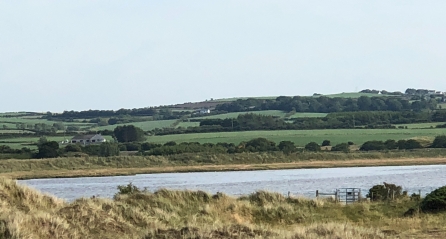
As I traveled around Ireland last month, I found myself thinking about those men and women of the Kelley, McCormick, Moriarity, Shoughro and Leahy families, wondering what their lives were like in Ireland and what it was like to move halfway across the world. I think about how different their lives must have been in their new homes: Did they miss the small routine patterns and pleasures of life back in Ireland, as I sometimes miss an American burger, supermarkets that are open past midnight and shopping at Marshalls? Did they sometimes long for the taste of some favorite food that just didn’t taste the same made by different hands and with slightly different ingredients? Surely they must have.
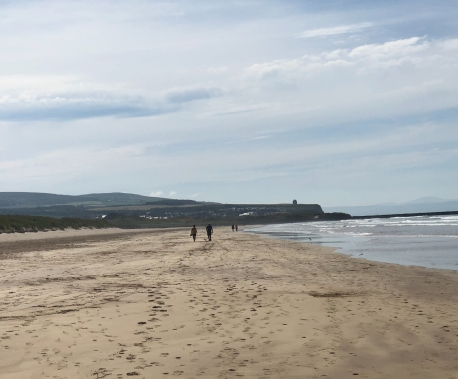
I think, though, that it must have been a comfort for those who, by luck or intent, wound up in the New England countryside rather than in the crowded, dirty metropolises of New York and Boston in the 1800s. The land and the sea doesn’t seem so very different from what they may have known back home. The dunes and sandy beach of Port Stewart in Londonderry County felt an awful lot like Cape Cod to me. The rolling green pastures and peaceful fishing towns of Antrim could have been Little Compton, Wickford or any one of dozens of small towns in Massachusetts, Connecticut or Rhode Island a century and a half ago. One whiff of the sea — a powerful mix of salt, seaweed and shellfish–on a rocky coast in Donegal, and I was instantly transported to the boulders along Ocean Drive in Newport.
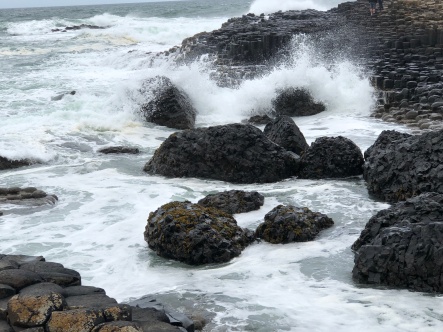
In a way, I suppose, Ive done my forbearers’ journey in reverse, leaving the U.S. for a new life in Europe. But our experiences aren’t really comparable. There are, of course, huge obvious differences wrought by technology.: I can be “home” in a matter of hours, not weeks. While my great grandparents bid goodbye permanently to family, neighbors and friends and would have gone weeks, months or even years with only an occasional letter bringing them news, I am pretty much constantly in touch with my son and friends in the U.S. I hear their voices and see their faces via FaceTime, whenever I, or they, feel the urge.
But there are more profound differences in our experiences as well. They were, for the most part young and looking for an opportunity for a better life, a place to build their families and call home forevermore. I’m old (well comparatively, anyway!) and resting on my laurels. I don’t need to make a living here, to assimilate and stake my future on my ability to adapt. I’m really just a traveler, who will likely pull up sticks in 5 or 10 years and return to the U.S. I can miss Smuckers’ all natural peanut butter or jones for a TJ Maxx fix and know that in a matter of months I’ll enjoy them again in the U.S. But they must have felt a kind of mourning for the things they’d likely never encounter again.
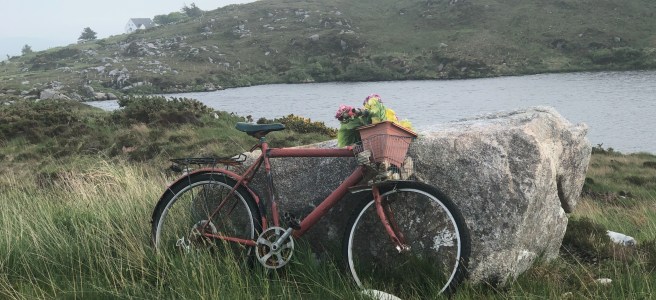
 in my car. And that doesn’t count the 17-hour ferry ride from France to the Southeast coast of Ireland. When you look at a map, Europe seems so small! The countries are so close together! But 2500 kilometers is like driving from Washington, DC to Amarillo, Texas. Of course, when I was done I was in Ireland, the land of freshly caught seafood, Guiness, soda bread, and lilting accents; rather than the place where Bob Wills is still the king.
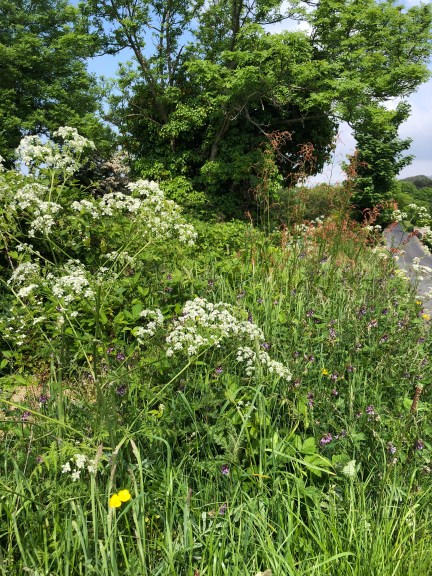 Rosslare, at the far southeast corner of Ireland. Dungloe, where I’m berthed for the next two weeks, is in the far northwest in County Donegal, which I am learning to pronounce correctly. Americans are inclined to say DON-e-gal. Bu it’s Don-e-GAUL. When you put the emphasis on the wong syllable, people look at you as if they have absolutely no idea where you are talking about. Gradually, it dawns on them; “Oh you mean Donegal!) I’ve also learned that Dungloe, pronounced Dun-GLOW as I was doing, is unrecognizable to the locals. It’s Dung-LOW or perhaps DUNG-low. I’ve still not quite caught where the emphasis goes, but in either case, the G all but disappears.

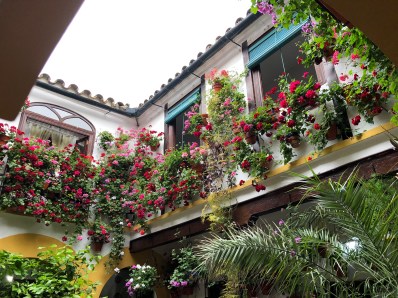 and private organizations throw open their doors , welcoming tourists and native Cordobans in to their interior terraces. The patios are lavishly decorated with flowers:




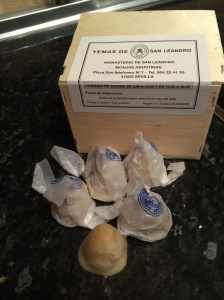
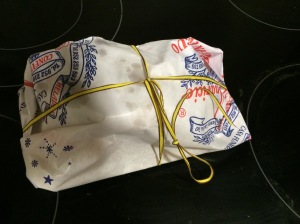 stuffed goodie to a gold foil tray, then wrap it in paper and tie it with a ribbon or string. In Valencia, the clerks at my favorite pasteleria eschewed the string, opting instead to hold two corners of the wrapping paper in each hand and swiftly flip it over a few times, winding the corners into twisted horns that hold your package closed. No plastic clamshells for these folks.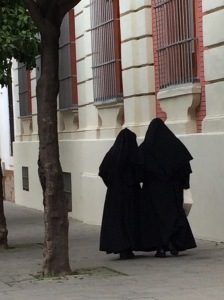

 meant for two people. And it wasn’t until a day or two later that I learned, no, it’s not just a bucket-sized Mimosa. Aqua de Valencia packs a potent punch of gin and vodka as well as the cava.

 ll end up in the water. Those of you who know me well will recognize this as highly unusual behavior. I typically avoid occasions that require scanty clothing and don’t particularly like swimming either in pools or at beaches. But in Sicily it’s easy to leave behind the self-consciousness about dimply thighs, sagging boobs and ginormous butts. Women (and men) of all shapes, sizes and ages have no compunction about revealing far-from-perfect bodies—pasta-bellies and wrinkles be damned. (Of course, some of them do look pretty good!) I’ve even taken to wearing sleeveless tops in the only slightly cooler evenings, letting my usually camouflaged underams flap freely.
 In Syracuse, the homes aren’t wooden and are centuries older than the summer houses of Laurel Park, but they share a sort of casual summer shabbiness as well as the faint smell of mildew and damp, and typically inadequate, outdated and often jerry-rigged plumbing and electrical systems. And just as in my hometown, here wet swimsuits and threadbare towels hang outdoors on railings to dry; flip-flops are the footwear of choice for all ages; and meals are casual affairs, often eaten outdoors.
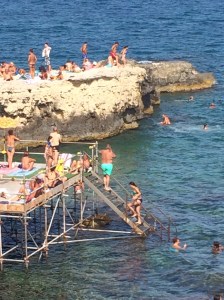 ed by a steep, fortress-like seawall, adding to the sense of Syracuse as a place with a long history of cultures repeatedly clashing and commingling. At one or two spots, long, steep staircases lead down to small sandy areas outside the seawall and a handful of tourists and locals spread their towels there to take in the sun and jump in the waves.
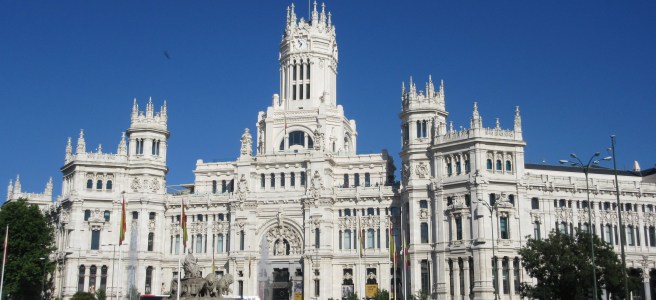




 can easily carry on a quiet conversation with the folks sitting at the café no more than 8 feet away, across the narrow street. In fact, the squeal made when you open the window shutters usually prompts most of the café’s patrons to turn and look. They nod hello and smile, and I adopt a rueful grimace and shrug an apology for the noise. At night, one draws closed the heavy wooden shutters and it’s pitch black inside the apartment. In fact, it’s still pitch black at midday the next day. If it weren’t for calls of nature, I might sleep right through from one evening to the next.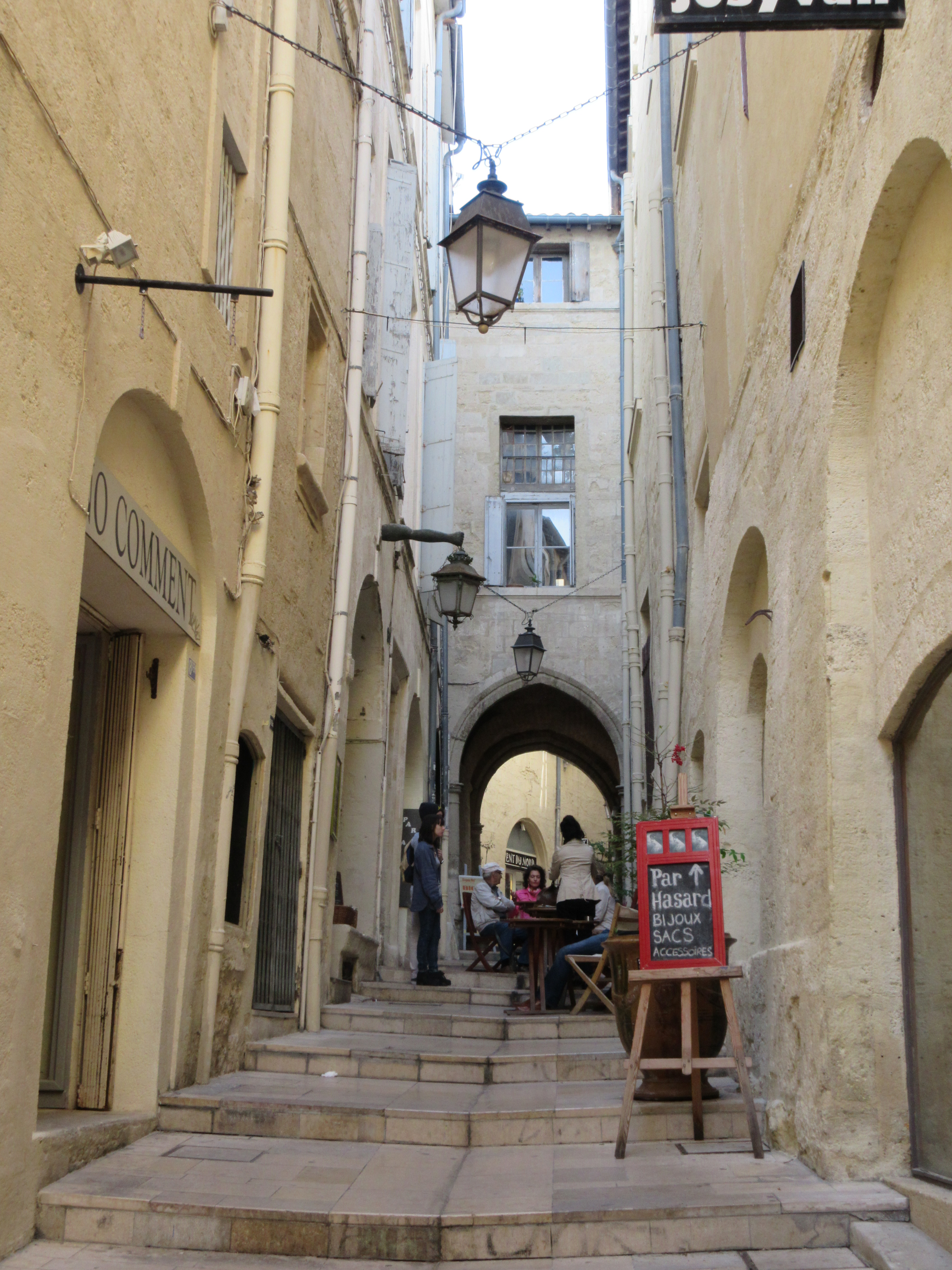



 But the prominence of Red Bull? That was unexpected, though maybe it shouldn’t have been. I didn’t realize that it was a European (Austrian) company. Slurping up sweet, super-caffeinated soft drinks seems so quintessentially American.



 The Itinerant Retiree